Weaving a Fabric of Unity: Interplay of Thought and Action
In this plenary session the co-authors of Weaving a Fabric of Unity: Conversations on Education and Development reflect on 50 years of experience in the pioneering enterprise that came to be identified as FUNDAEC (the Foundation for the Application and Teaching of Science). Highlighting its unique conceptual and methodological approach, the speakers explore FUNDAEC’s contribution to intellectual life and social action in communities around the world. The session seeks to illuminate, for a new generation of scholars and practitioners, FUNDAEC’s vision for education for development that combines theory and practice while supporting diverse populations working towards the collective realization of a dignified future.
Haleh Arbab
Haleh Arbab, Ed.D. (Education and Development, University of Massachusetts), worked (1982‐2005) with FUNDAEC in Colombia, developing educational content and programs to promote community wellbeing, and serving (1995‐2005) as Rector of Centro Universitario de Bienestar Rural. Since 2005 she is Director of the Institute for Studies in Global Prosperity in Haifa, Israel.

Bradley Wilson
Bradley Wilson is associate professor of geography at West Virginia University and founding director of its Center for Resilient Communities. His research explores community responses to economic crisis, food insecurity and environmental injustice in Central America and Central Appalachia. In recent years he has been engaged in action research in West Virginia with community organizations to build grassroots capacity for food system change and to advance the right to food.
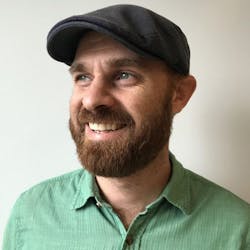
Gustavo Correa
Gustavo Correa studied mathematics as the Universidad del Valle in Cali, Colombia, completing an undergraduate degree and he then moved to the United States where he completed a Masters degree in Public Administration at Harvard. He then returned to Colombia where he was employed as a Professor of mathematics at the Universidad del Valle.
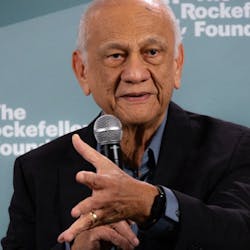
49th annual conference
The views expressed in this recording are those of the presenters and do not necessarily represent the views of the Association for Bahá’í Studies, nor the authoritative explications of Bahá’í writings.